Thursday, 25 March 2010

With 300% increase in number of visitors on 4th Tuesday, Chaitra festivities reach a crescendo at Tara Tarini Hill Shrine

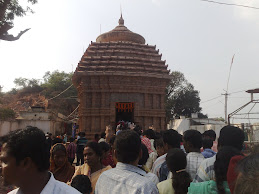
On the sacred occasion of Fourth Tuesday of the famous Chaitra festival around five lakhs devotees thronged Tara Tarini hill shrine from various parts of the state and outside. It may be noted that all the Tuesdays of the month of Chaitra are days of festivity at this hill shrine and this is the biggest fair held here in honour of the twin goddess.
Like the Third Tuesday (Around 7 lakh devotees gathered on that day) there was also heavy rush on the Fourth Tuesday on the hill top temple of Adi Shakti Maa Taratarini as coincidentally it was also Mahastami day of Navaratri festivities.
On this Tuesday, the massive gathering broke all records of previous years as it saw a three fold increase in the number of visitors as compared to the last year. There were visitors from far of places like Assam, North eastern States, and Tamilnadu apart from states like Andhra Pradesh, Chhattisgarh, West Bengal, Madhya Pradesh and Jharkhand.
The festivities had started at this shrine from Monday evening. Throughout the night there were cultural programmes to entertain the devotees. After some ceremonial works the sanctum of Maa Tara Tarini opened at around 2 a.m in the morning and darshan started after that. As per the report available on that occasion at least 50,000 people offered the hair of newborn babies at the Shrine similar to the practice found at Tirupati Balaji.
It may be noted that last year during the month of Chaitra more than 17 lakh people visited the hill shrine. So, sensing that the devotees would increase further, the Tara Tarini Development Board (TTDB) has carried out a lot of development works and made wide arrangements for the smooth darshan of devotees.
Meanwhile, Orissa Chief Minister Shri Naveen Patnaik has also taken steps for the development of this Shrine. As part of the development programme, on the eve of the commencement of Chaitra festivities at the Shrine the CM has inaugurated a multifunctional complex and a lavatory complex on the foot hill of the Shrine and another ultra modern lavatory complex is also coming up on the hill top for the benefit of devotees. Appreciating the developmental projects taken up by the Tara Tarini Development Board (TTDB); which led to major transformation of this ancient hill shrine Shri Patnaik expressed his satisfaction with the progress made so far which has led to the emergence of this Adi Shakti Peetha as a major centre of religious tourism in Orissa.
Principal Secretary Urban Development Government of Orissa Sh. Arun Panda, RDC Southern Division and Chairman of TTDB Shri Chandrasekhar Kumar, Ganjam District Collector Shri VK Pandian, Collectors of many other districts, BMC Commissioner Sh. Veemsen Manseth, Superintendent of Police Berhampur and Ganjam and many other senior state and central government officials, apart from the office bearers of TTDB were present on the Fourth Tuesday.
On the sidelines a meeting was held where the Principal Secretary Urban Development Government of Orissa Sh. Arun Panda and all office bearers of TTDB participated.
• It was decided that for the benefit of devotees next year steps would be taken to arrange around 5000 tents with all other facilities on temporary basis for the accommodation of atleast 50,000 people.
• More number of buses would ply for the smooth transportation on to the hill top.
• It was also decided that retaining walls would be constructed on both sides of the hill top to protect the area from land sliding.
• And the work of the hill top temple complex with four Parshwa temples and boundary wall will be completed in a time bound period.
Principal Secretary Urban Development Government of Orissa Sh. Arun Panda, RDC Southern Division and Chairman of TTDB Shri Chandrasekhar Kumar, Ganjam District Collector Shri VK Pandian assured all help from government side to the Development Board.
The Ganjam District administration made elaborate arrangements for the visitors. The volunteers of the TTDB, different NGOs and voluntary organizations, the temple management and local residents extended their helping hand to devotees who came from various parts of the state and other neighbouring states.
____________________________
R P Tripathy
Media & Publicity In-Charge
Tara Tarini Development Board
Berhampur
Orissa


Friday, 19 March 2010

Lakhs of turtles nest in Rushikulya beach near Taratarini Hill Shrine

Over one lakh endangered Olive Ridley sea turtles have laid eggs on the beach adjoining the Rushikulya river mouth near Taratarini Hill Shrine in district Ganjam, Orissa since March 13 as scientists observed the phenomenon with interest. The eggs are expected to hatch in the first week of May, about 45 days after the mass nesting. Rushikulya river mouth is just 20km from the famous Shakti Shrine Taratarini and around 40 km from Berhampur city. 

While 6,000 turtles emerged from the sea to lay eggs in the wee hours of March 13, around 65,000 swarmed the four-km long sandy beach between Gokharakuda and Kantiagada the next day. The number of nesting turtles came down thereafter.

Kartik Shanker, a turtle biologist from the Indian Institute of Science - Bangalore and Basudeb Tripathy of the Wildlife Institute of India, who are here to study the pattern of mass nesting, said the laying of eggs could continue sporadically for a few more days.

Source: PIT

Thursday, 18 March 2010

                                  Source: Anupam Bharat (Odiya Daily)

Wednesday, 17 March 2010

Sea of devotees throng TaraTarini Hill Shrine

Lakhs of devotees thronged Tara Tarini hill shrine near Berhampur, on third Tuesday of Chaitra and on the first day of Navaratri. It may be noted that the four Tuesdays of Hindu month of Chaitra are days of festivity at this hill shrine. On this Tuesday more than five lakh devotees had reached the hill shrine. There was heavy rush as it was also day for the start of Navaratra festivities. There were visitors from other states like Andhra Pradesh, Chhattisgarh, West Bengal, Madhya Pradesh and Jharkhand as well as some NRI families. Following major transformation due to developmental projects taken up by the Tara Tarini Development Board (TTDB); this hill shrine has now become a major centre of religious tourism in south Orissa.
Chaitra month
It may be noted that last year during the month of Chaitra more than 17 lakh people visited the hill shrine. The TTDB authorities hope this year the devotees would increase further. The festivities had started at this hill shrine from Monday evening. Throughout the night there were cultural programmes to entertain the visitors to the shrine. Although this hill shrine boasts to be having the only ropeway to a hilltop in the State, yet most of the devotees due to their traditional belief decided to climb to the top of the hill shrine. They walked on the ghat road or used the steep stair case. They climbed 999 steps as a penance to the deities.
Rural fair
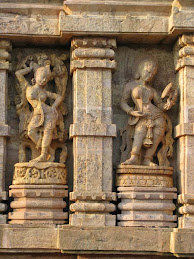
A rural fair was on at the foothill. Urbanites who had reached the spot as picnickers enjoyed the village fair. Forgetting mental blockades related to hygiene for some time they relished fresh sugarcane and colourful sweets sold by the roadside vendors at this rural fair. The beautification and developmental works were taken up at the hill shrine by the TTDB from donations from the public. The State government in cooperation with the Ganjam district administration has formed the TTDB for development of this hill shrine into a major tourist destination. This board includes eminent persons of Orissa especially from southern region. The TTDB has now replaced the old temple with a new one in the traditional ‘Rekha' style of Orissa.
Source: The Hindu
Source: The Anupam Bharat

Sunday, 14 March 2010

Taratarini, Toptopani, Daringbari & Dhoboleshwar, Orissa: By Mr. Debashis Bose

By Mr. Debashis Bose, Contributing Traveller , Kolkata, From 10-1-2007 to 16-1-2007
I10-1-07 : This time we were 7 heads. We left Howrah by Gurudev Express at 11.25 pm and our destination was Brahmapur.
11-1-07 : We arrived at Brahmapur at 10.10am, and then reached the bus stand by auto in 10 minutes. Our bus for Taratarini started at 11.05 am and reached at 12.20pm, covering 30 kms. We had lunch at a roadside hotel and then went to Panthashala of OTDC by a trekker.

It is a small, calm and quite place. The Panthashala is at the top of a small hillock - a nice location, clean and tidy.

While at the top of the hill, we could see valleys and ranges of hills around us. Inside the temple compound of the Taratarini Temple Gradually the sun went down. We went to the temple of Tara & Tarini. The old temple is smaller while the new one is under construction - located just around the old one. There were a lot of craftsmen giving shape to stone boulders. This may take another two and a half years to be completed. Though there will be a vehicular road, there will also be 999 steps. Around the temple, there are lots of big trees and its serenity can be felt.

Going down, we reached Rishikulya river. Here we met two local young men who informed us that a lot of pilgrims arrive at the temple on all Tuesdays of the month of Chaitro (15th March to 15th April) every year, to worship the goddess. The other bank of the river is known as Purushottampur.

Temple of Dakshinakali at Prushottompur
12-1-07 : We hired a Tata Sumo and left at 07.22am to Purushottampur to visit the temple of Tumbeshwar Shiva and Dokshinakali Devi.
 
Temple of Lord Shiva near hot spring at Toptopani
Our next target was Toptopani. Though there is a direct road, we went via Gopalpur since some of our teammates had never been to Gopalpur.

Gopalpur - on-sea, as it was known earlier, is a very small place with a few hotels and shops on the sea beach and around. We went for a stroll along the beach, had tea and visited a few shops of local handicrafts. We also indulged in some shopping.

Next, we reached Toptopani at 12.25pm. Here again, we stayed at Panthashala of OTDC. There are a few double storied buildings that offer double bed room accommodations with attached bath, and a two room suite & office in a separate building. There is an eatery in a separate building as well. Toptopani is a calm and quite village with big trees, almost within a jungle. We had our lunch at the eatery.
In the evening, we went for a walk and visited a hot spring from which Toptopani has derived its name. As expected, the water of the hotspring was smelling of sulphur. There are two separate bathing places near the hot spring, for gents & ladies. The hot water has been taken by pipelines to a few taps on the roadside and to the panthashala. Bathing in this hot water makes one feel fresh and energetic. it has been said that this water is good for health. We had our dinner at the same place.

13-1-07 : After our morning's daily routine and breakfast, we left at 10.30am by Tata Sumo and reached Horbhongi Dam, 30 km away, at 11.45am. Here we spent 45 minutes, going around the dam & the inspection bunglow.
Dam at Horbhongi
Our next destination was Daringbari, 240 km away and reached at 02.30 pm, at a height of 4000 ft. This place is also known as the Kashmir of Orissa, and it is said that in the past, there was snowfall here. We had our accommodation booked at the Panthaniwas of OTDC.
Another view of the dam
The Panthaniwas was not very clean and the caretaker was not in a normal state. Anyhow, the rooms were cleaned and we occupied our respective rooms. This is like a small town and the temperatures are low here. Next day was Mokor songkranti, a festival day and hence, the shops and markets remained closed. We decided to purchase some ingredients to prepare our food for the next day. Here, it may be stated that, OTDC has two types of accommodation for tourists - Panthashala & Panthaniwas, the former has arrangements for cooked food, while the latter does not provide food. There are a few utensils available and food may be prepared with the help of the caretaker. We had our dinner at a roadside hotel.

14-1-’07 : All of us jointly prepared our breakfast and lunch too and enjoyed a picnic at the roof-top. Later, we left by the same vehicle to see the watch tower, about 2 km away. This is a decorative place for tourists and has a garden, swings etc. for children. There were 10 steps to go to the top of the watch tower from where a beautiful natural scenery of valleys and hill ranges could be seen. Then we drove to pepper and coffee plantations. Back to the Panthaniwas - after having dinner, the day ends.

15-1-07 : We were ready by 06.00 am and left Daringbari for Dhoboleshwar via Cuttack, 300 kms away. We had our breakfast en route, and had lunch at the ISKON temple at Cuttack - very nice vegetarian food.

Sunset at Mahanadi river at Dhoboleashwar

We reached Moncheshwar at 02.35pm. and had to cross the Mahanodi river on foot, over the concrete bridge, as the Panthaniwas of Dhoboleshwar was on an island. Here there is only one Temple of Dhoboleshwar (Shiva) & the Panthaniwas. We went to the temple for Darshan - this temple was built in 10/11th century by the Utkalraj.
Temple of Lord Krishna (ISKON) at Cuttack
We also had a round on a boat in the Mahanodi. Next, we went to the other side of the river, to visit the temple of Moncheshwar (Shiva). We had our dinner at the Panthaniwas. 16-1-07 : After breakfast, we packed up and went to Moncheshwar. We availed the bus at 08.40 am and reached Cuttack at 10.25 am. Many of us went for shopping. We had our lunch at the Railway station canteen. We left for Howrah by Dhauli Express and reached at 08.40 pm. By local train to Uttarpara. We dispersed for “Home, Sweet Home”.

About Contributing Traveller : Mr. Debashis Bose is a 72 year old retired Railway employee whose hobbies include travelling & tourism, photography and amateur radio. He is a nature lover and prefers to visit little known places as opposed to big cities with the aim of enjoying nature in abundance. Before going on his regular tours with family and friends, Debashis spends time in studying different places and collecting information about them. On returning from the visit, he prepares a travelogue, with sketch map & photos, so that he can inspire others to visit these places and enjoy nature. vu2dba@gmail.com
link: http://www.contentwriter.in/industry-resources/travelogue/taratarini-toptopani-daringbari-dhoboleshwar.htm

Wednesday, 3 March 2010

Thousands throng Tara Tarini hill shrine on first Tuesday of Chaitra

The famous annual Chaitra festival at the Tara Tarini hill shrine near Berhampur city in Orissa started from Tuesday. It is believed that Taratarini Sthana Peeth (Breast Shrine of Mata Sati) is one of the ancient and among the four major Shakti centers in India. Thousands of devotees had started gathering at the hill shrine from Monday afternoon itself. Transport Secretary Government of Orissa Shri Satyabrata Sahu, RDC Southern Division and Chairman of TTDB Shri Chandrasekhar Kumar, Ganjam District Collector Shri VK Pandian and many other senior state and central government officials, apart from the office bearers of TTDB and Temple Management were present on the occasion.
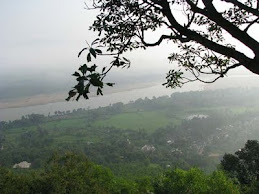
The Tara Tarini Development Board (TTDB) made elaborate arrangements for the devotees. Apart from the aerial rope way the TTDB had also arranged special buses to carry visitors to the hill top. But most of the devotees, of all age groups, preferred to climb the 999 holy steps to the hilltop as they consider it to be a penance. Recently the steps have been repaired before the annual festival. The ghat road to the hilltop and the foot hill roads have also been widened in view of the growing number of visitors to the Shrine. On Tuesday only the special buses of the TTDB were allowed to ply on the ghat road for security reasons.

The Army Air Defence College, Gopalpur, Berhampur Municipal Corporation, Ganjam District administration and District police made elaborate arrangements for the visitors. The volunteers of the TTDB, different NGOs and voluntary organizations, the temple management and local residents actively helped the devotees who came from various parts of the state and other neighbouring states.

Monday, 1 March 2010

Saturday, 28 November 2009

Thursday, 26 November 2009

LADY OF THE RESTLESS WATERS


By Pratima Kamat
Ensconced in the foothills of the Sahyadris and lapped by the Arabian Sea along a palm-fringed coast interrupted at places by the estuaries of the Mandovi, Zuari and other rivers, Goa has been an entrepôt of renown. The cultural links between water and worship in coastal Goa are, indeed, many. The religious lore of this land contains references to maritime festivals and deities. A unique component of the cultural legacy of Goa is the ‘maritime’ Mahishasuramardini of the Mhadei, the exclusive ‘boat deity’ of the Mhadei river valley. The earliest references to this deity can be traced to the early medieval period, when the Kadamba dynasty ruled over the region.
I have studied and documented fifteen sculptures in which a female deity, who is worshipped locally as Santeri/Shantadurga, Jogeshwari, Navadurga, or as an anonymous parivar devata, is depicted either seated atop or standing in a boat (one of them even sits on a boat shaped like a fish); two images of Gajalakshmi with howdahs in the shape of a boat; three sculptures of Brahmanimaya with a boat carved on the pedestal, and six of male deities who are shown either standing fully armed, with a boat etched on the pedestal, or riding a horse positioned above the boat-like pedestal. Most of these Devi sculptures have votive origins. In the absence of a distinct local epithet for these deities, I have referred to the boat-goddess as Tarini and the boat-god as Tar-Vir, alluding to the cultural and iconographical similarities with the famous goddess Tara-Tarini of the Orissa coast.
The worship of Tara and Tarini is found in Orissa’s Ganjam district (which has the famous ancient Tara-Tarini temple), Ghatgaon and Ratnagiri (where the Astamahabhaya Tara is worshipped). These are the patron deities of sailors and merchants. Tara is worshipped by sailors for safety and success at sea along the Orissa coast. The Ratnagiri Tara is believed to save her devotees from eight great fears, one of which is of shipwreck. Yet another fear, jalarnavabhaya, is of drowning in a sinking vessel.
Unlike in Orissa, the ‘boat deities’ of Goa, Tarini and Tar-Vir, are found away from the coast, in the sub-Ghat talukas of Sattari and Sanguem, against the backdrop of the Sahyadri mountains, in the villages of Keri, Bhuipal, Nagvem, Zarme, Sonal, Sanvarde, Bhironda, Dhamshe, Guleli, Shayll-Melauli, Malpann in Sattari; Ganjem in the Ponda; and Barabhumi, Surla and Talldem of Sanguem.
The spots where the sculptures have been found are almost always located along the banks of the Mhadei and its tributaries, lying either inside a temple or, weather-beaten in the open, amidst lush greenery, in the vicinity of a stream, and often in the periphery of the devarai or the sacred grove, and, in one instance, outside the Bondla wildlife sanctuary.
Almost all the images have been carved out of schist stone, locally known as pashaan. Local temple architects and sculptors were engaged to carve these images. Hence, the iconography of the sculptures found in the Mhadei valley bears a clear local influence, introduces a Sattari flavour or creates an amalgam of various artistic forms and iconographies from different belief-systems, (folk, Brahmanical, as well as Jain and Buddhist), rather than adhering to the classical forms.
The Devi-in-a-boat is, thus, a unique work. In the Devi Mahamatya, the Devi is hailed as “Durga, the boat that takes men across the difficult ocean of worldly existence, devoid of attachments”. She is also the saviour of one who is “tossed about in his boat by a tempest in the vast sea”. Tarini and Tarita are names of Durga. Tarani, which means a boat, is also the Sanskrit word for saviour. The goddess is hailed as Tarini in Arjuna’s hymn to Durga in the Mahabharat. Gayatri, the primal form of Tara or Bhavatarini, is hailed as “bhaya-haarini bhava-taarini” (the one who removes fears and ferries across the river of life). The only maritime reference for Mahishasuramardini is the epithet, “daughter of the ocean”, in the Mahishasuramardini Stotram.
Hence, the association of Tarini with the boat to signify her status as the rescuer of shipwrecked sailors, the protector of riverine traders and others who sailed in the Mhadei. She also spiritually denotes the concept of Tara as the deity who assists souls to ‘cross to the other shore’. The Goan version of Tara-Tarini of Orissa, perhaps? In her many avatars, Tarini as Santeri or Shantadurga is a symbol of fertility; as Ganga, she is the river goddess representing the Mhadei; as Tara, she rescues and ships her devotees to safety; and above all, as Mahishasuramardini, the boat-goddess is the protector, the slayer of the enemies of the local sailors and merchants.
The talukas of Sattari and Bicholim, important points in the trade route, contributed to Goa’s cultural ethos by hosting not just Hindu shrines, but also Buddhist and Jain settlements. Buddhism and Jainism flourished in this region during the ancient and early medieval periods. Kothambi, Kudnem, the caves of Lamgaon, and Colvale at a little distance, were important centres of Buddhism and Jainism. Hence, elements of the Jain Yakshi and Ambika, found their way into the conceptualization and at times, the artistic execution, of the maritime Mahishasuramardini. While we discovered an image of a Buddhist or Jain monk close to the Sanvarde Tarini, the sculpture in Shayll-Melauli displays the image of a Buddhist monk on its base.
The boat-Devi is most commonly found to possess the attributes of an eight-armed Mahishasuramardini, though a couple of sculptures that contain interesting maritime information are chaturbhuja — with four arms. She is either seated on an asana in a boat, or on the boat itself, or is depicted standing in the boat. Almost all the sculptures exhibit human heads in the boat, with boatmen on either side of it, and in the Nagvem sculpture, the oarsmen are actually shown in the act of rowing the vessel.
Other than the ubiquitous boat, most of these sculptures contain related nautical and marine motifs, such as oars, anchors, mast, sail, pennant, fish and crocodile.
The Tarini and Tar-Vir sculptures of the Mhadei, Ragada and Valvanti river valleys provide valuable clues about ancient trade routes and practices, manufacturing centres, riverine ports, types of watercraft used, boat-building traditions and locations, trading communities and cultural interactions that took place as a consequence of thriving commerce.
The discovery of these sculptures has helped me give visibility to the hitherto-largely-undocumented contribution of the talukas of Sattari, Bicholim, Sanguem and Ponda to the commerce of ancient and early medieval Goa and the Konkan coast. Links may even be established between the east and west coasts of India on the basis of the resemblance of the Goan Tarini to Orissa’s Tara-Tarini. The similarities are not confined to the concept of a saviour-deity and the iconography of a goddess-in-a-boat, but extend to other cultural parallels such as boat festivals, and derivation of place-names.
The Tarini and Tar-Vir not only provide valuable clues about the Western Ghats-Arabian Sea trade, of which Goa (Sattari, in particular) had served as an important conduit, but also about the coming together of folk, Sanskritic, Buddhist and Jain traditions, as locally crafted syncretic saviour-deities for the river traders and boatsmen of the Mhadei.
Influenced by the play of varied cultural elements, the Mhadei river valley serves as the crucible of the syncretic Tarini. The goddess who is depicted as either standing or seated in a boat, is a rarity in Indian art. The commercial worthiness of the Mhadei, the Buddhist and Jain settlements that dotted the trade routes in the sub-Ghat region, the presence of the local Chari community as divine sculptors — all these contributed to the creation of the unique representation of the goddess-in-a-boat.
The Tarini is thus a syncretic vision of the Shakti of the Mhadei river valley, a saviour-goddess epitomizing the “shared faith” that characterized the cosmopolitan Sattari in the early medieval period. This taluka brought within its fold a surprisingly wide range of local, Sanskritic, Buddhist and Jain traditions — yet another reminder of the inclusive civilization that India once was.
(The author is head of the department of history, Goa University)
Source: The Telegraph
Source: The Pragativadi

Tuesday, 24 November 2009

2nd phase to start at 2nd phase to start at Sthana Peetha Taratarini under new chairman under new chairman

Bhubaneswar: Revenue Divisional Commissioner (RDC) of Southern Division of Odisha Chandrasekhar Kumar is the new chairman of the Tara Tarini Development Board (TTDB), a prominent temple administration body in Ganjam district. He has taken over from the outgoing RDC and former TTDB chairman Satyabrata Sahu who is now the Commerce & Transport Secretary of the State Government. It was under the guidance of the former chairman that the first phase of the stone temple was completed. This religious shrine is believed to be the Sthana Peetha (Breast Shrine) of Mata Sati and one amongst the four major ancient Shakti centers in India.The new chairman visited the shrine and discussed the commencement of the second phase of work. Board Secretary Pramod Panda along with the other board members tabled the primary draft of the second phase of work and it was decided to finish all on-going work before the upcoming Chaitra MelaThe projects in the second phase include completion of Kalyana Mandapam, construction of huge hill-top parking space, widening of stone steps and arrangement of public utilities or rest houses, maintenance of eco-system, construction of a hospital and the construction of a residential school and training centre for the physically challenged.
Source: The Pioneer

Thursday, 19 November 2009

New chairman takes over charge of Taratarini Development Board

TARATARINI DEVELOPMENT BOARD
Regd. No.: GJM No. - 7177-A – 676/2002-2003
Hillpatna, Berhampur – 5, (Ganjam), Orissa
(0680) 2215168, Website: http:/
taratarini.nic.in
E-Mail: rdcbmp@ori.nic.in, hillshrine@hotmail.com
------------------------------------------------------------------------------
Shri Chandrasekhar Kumar, IAS and the new Revenue Divisional Commissioner (RDC) of Southern Division, Odisha has taken over the chairmanship of the Tara Tarini Development Board (TTDB), considered as one of the prominent temple administration bodies of the State. This famous prehistoric religious hill shrine is believed to be the Sthana Peetha (Breast Shrine) of Mata Sati and one amongst the 4 major ancient Shakti centers in India.
As per the convention of the Board, Mr Kumar who has recently joined as the RDC, Southern Division is replacing the outgoing RDC and the Chairman of TTDB Shri Satyabrata Sahu, who has since joined as the Commerce & Transport secretary of Government of Orissa.
It is noteworthy that Shri Satyabrata Sahu’s Chairmanship was eventful as it marked the completion of the 1st phase of the magnificent stone temple at Taratarini Hill Shrine and the shrine and its peripheral areas witnessed massive development in the past few years. During his tenure the Board has successfully completed the;

1. Work of the main temple for the Twin Goddesses,
2. Initiated the work of widening of the 999 holy steps with rest sheds,
3. Widening of the roads leading to the hilltop,
4. Completion of drinking water project on the hill top,
5. Constructed the first Aerial “Rope Way” of Eastern India for easy and fastest communication for visitors and
6. Started massive plantation in and around the hill shrine for the maintenance of eco-system.


After taking over the charge Shri Kumar visited the holy shrine and discussed the status of the 2nd phase of work, which is going to commence soon. Board secretary Shri Pramod Panda and other members tabled the primary draft of the second phase of work and it was decided that after thorough consultation, the Board will shortly start the 2nd phase work and will try its best to complete the on-going projects before the commencement of the forthcoming Chaitra Mela.
The TTDB members, office bearers and the temple administration while congratulating Shri Kumar expressed the hope that the Hill Shrine will become a great center of religious and tourist importance in the country under his chairmanship. It is worth mentioning that the second phase work of the temple which will start soon includes;

1. Construction of a huge multipurpose complex on the hilltop, four side-temples, boundary wall and outer protection wall / river side retaining wall to check land sliding and soil erosion at the hilltop.
2. Construction of administrative office on the hilltop.
3. Construction of Bhog Bazaar on the hilltop.
4. Construction of Mundan shade on the hilltop.
5. Construction of a big public utilities complex.
6. Construction of waiting hall for the Rope-way on the hilltop.
7. Further development of Aerial Rope-way.
8. Arrangement of space to accommodate the buildings for ATMs, Lockers, Shoe stands and other facilities.
9. Completion of Kalyana Mandapam.
10. Construction of huge parking space at the hilltop.
11.High quality lighting on the hilltop and inside the temple premises. Lighting arrangement on the 999 holy stone steps and road leading to the Hilltop from Taratarini junction.
12. Further widening of stone steps and arrangement of public utilities/ rest houses.
13. Further widening of the existing road to the Hilltop.
14. Maintenance of eco-system in and around the sacred hill by huge plantation in its nearby areas.
15. Construction of a hospital.
16. Construction of a residential school and training centre for the physically challenged etc.

Warm Regards,
R.P.Tripathy
In-Charge Media & Publicity, Tara Tarini Development Board (TTDB)

Thursday, 12 November 2009

Chandrasekhar Kumar takes over as the chairman of Taratarini Development Board

BERHAMPUR: Shri Chandrasekhar Kumar, IAS and the new Revenue Divisional Commissioner (RDC) of Southern Division has taken over the chairmanship of the Tara Tarini Development Board, considered as one of the prominent temple administration and development bodies of the State. As per the convention of the Board, Mr Kumar who has recently joined as the RDC, southern division is replacing the outgoing RDC and the Chairman of TTDB Shri Satyabrata Sahu, who has since joined as the Commerce & Transport secretary of Government of Orissa. Shri Sahu’s Chairmanship was eventful as it marked the completion of 1st phase of the magnificent stone temple at Taratarini Hill Shrine and the shrine and its peripheral areas witnessed massive development in the past few years.
The TTDB members and office bearers while congratulating Shri Kumar expressed the hope that the Hill Shrine will become a great center of religious and tourist importance in the country under his chairmanship. It is worth mentioning that the second phase of the temple, which includes construction of a massive complex for the devotees and the construction of four side-temples, boundary walls, social initiatives apart from many other small projects and plantation drive, have started recently.